



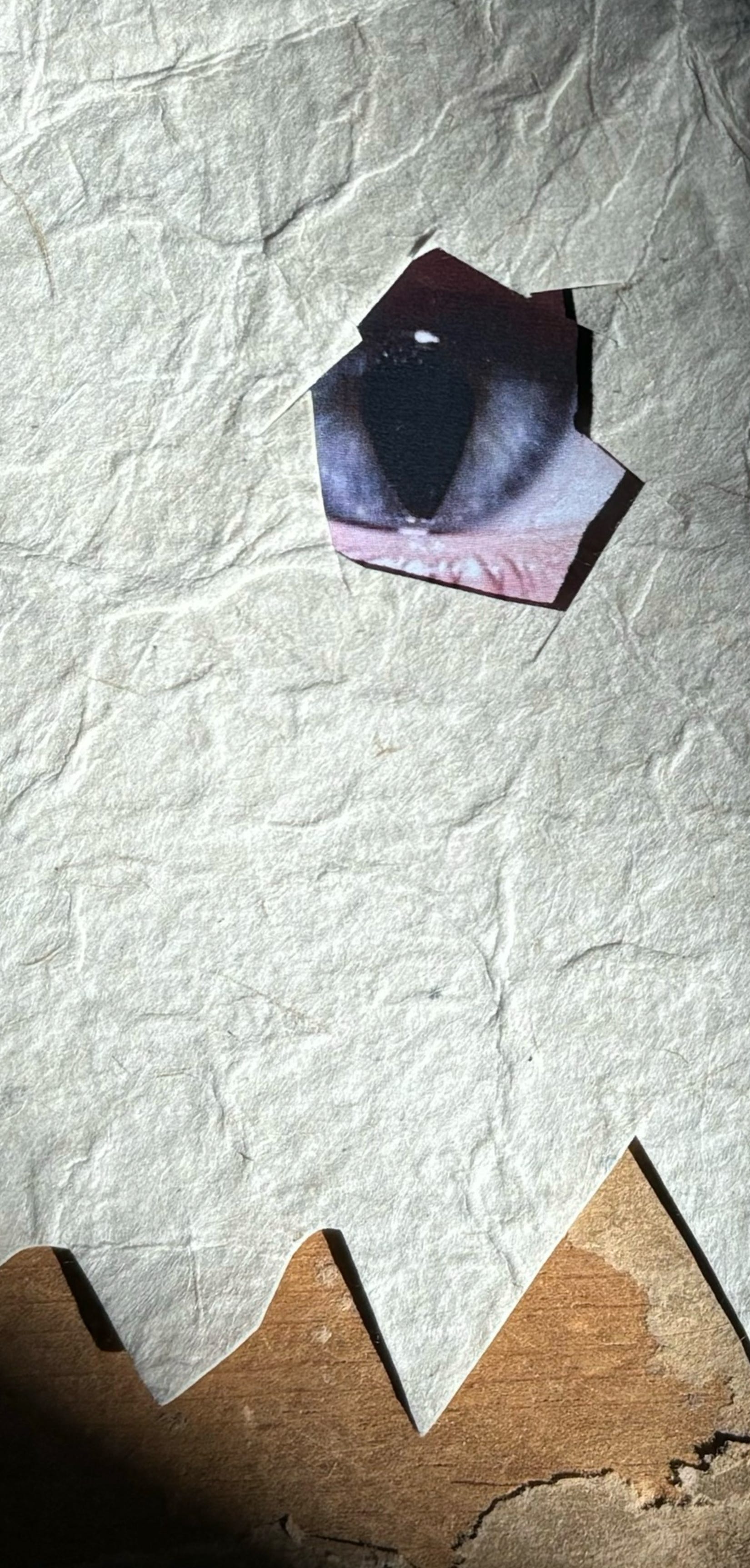
I can still see his eyes, pupils spilling out to meet iris like a fried egg’s broken yolk. The most handsome boy in town, but treated like sin, hidden like a secret letter. I was never put off by his eyes. If anything, they drew me in. I wanted to swim in them, to mix his pupils into the greens and browns of his irises until they became the color of a moonlit forest. And I wanted to be his protector.
Momma once told me of a man with eyes like melted wax. I asked her how they got that way, and she said it was something they saw. When I asked her what it was he witnessed, she said he finally saw himself. That was the same night she showed me the tin.
I first met Wes behind the schoolyard wall. He was alone, smoking a cigarette, and I was looking for my ball, which I had kicked over the wall as an excuse to introduce myself. At fifteen, I was older than him, but only by a year. His family lived in the large house by the lake, and I lived with Momma in a mobile home out past Duggie’s drive-in, around the bend from the gravel yard.
“Hey,” I said, pretending to look for my ball.
“Hi,” said Wes. “I saw it bounce that way.” He motioned toward a row of heavenly bamboo.
“Thanks,” I replied. “ It’s a nice little hiding place you’ve got here. I’m Nico.” I held out my hand, praying he wouldn’t see the tremor.
“Wes.” His hand was more masculine than I thought it would be. Strong, square. “Want one?” He held out his box of cigarettes, and I took one without hesitation. I’d never smoked before, but I didn’t want the moment to end.
“You live over in that big house by the lake, right? You must enjoy being so close to the water when the summer rolls around.” I smiled and flipped my hair out of my face. I saw a kid flip his hair out of his face once in a movie.
“Yes,” he said, then paused to light my cigarette. I watched the flame eat the paper.
He continued, “I’m not a big fan of water. It’s cold, and you can’t see what’s below you.”
“I guess you’re right,” I replied with a nod. I didn’t tell him that I loved the water. Momma often said I was part fish. “I heard you playing piano the other day in the music room. I was passing by—”
“That wasn’t me.”
I narrowed my eyes; it was him, but I didn’t press it. Instead, I reached into my pullover and fetched an antique tin, the words PASTILLES DE MENTHE on the top.
“I took this off of Mr. Davenport’s desk the other day. Not sure why I did it. Want it?”
He took the box but didn’t open it. He just smiled at me and put it in the pocket of his slacks. “What are you doing later?” he said. “Want to come back to my place and listen to records?”
The teacher blew the whistle; it was time to go back to class. We put out our cigarettes, and I picked up my ball. We agreed to meet out front after school. As he walked toward the east wing, and I to the west, he didn’t look back at me. But I watched him. I watched him until he was out of sight.
When Momma was a young girl, she lived in New Orleans. She loved it there, and though it’s been nearly thirty years since she’s lived in Louisiana, some days, I can see the longing in her eyes. She told me about the air in New Orleans, sticky like a favorite child’s hand, the streets warm like a lover’s palm, and the darkness, as viscous and sweet as a port. She told me how, as a child, she found an empty peppermint tin in the gutter outside of an old church.
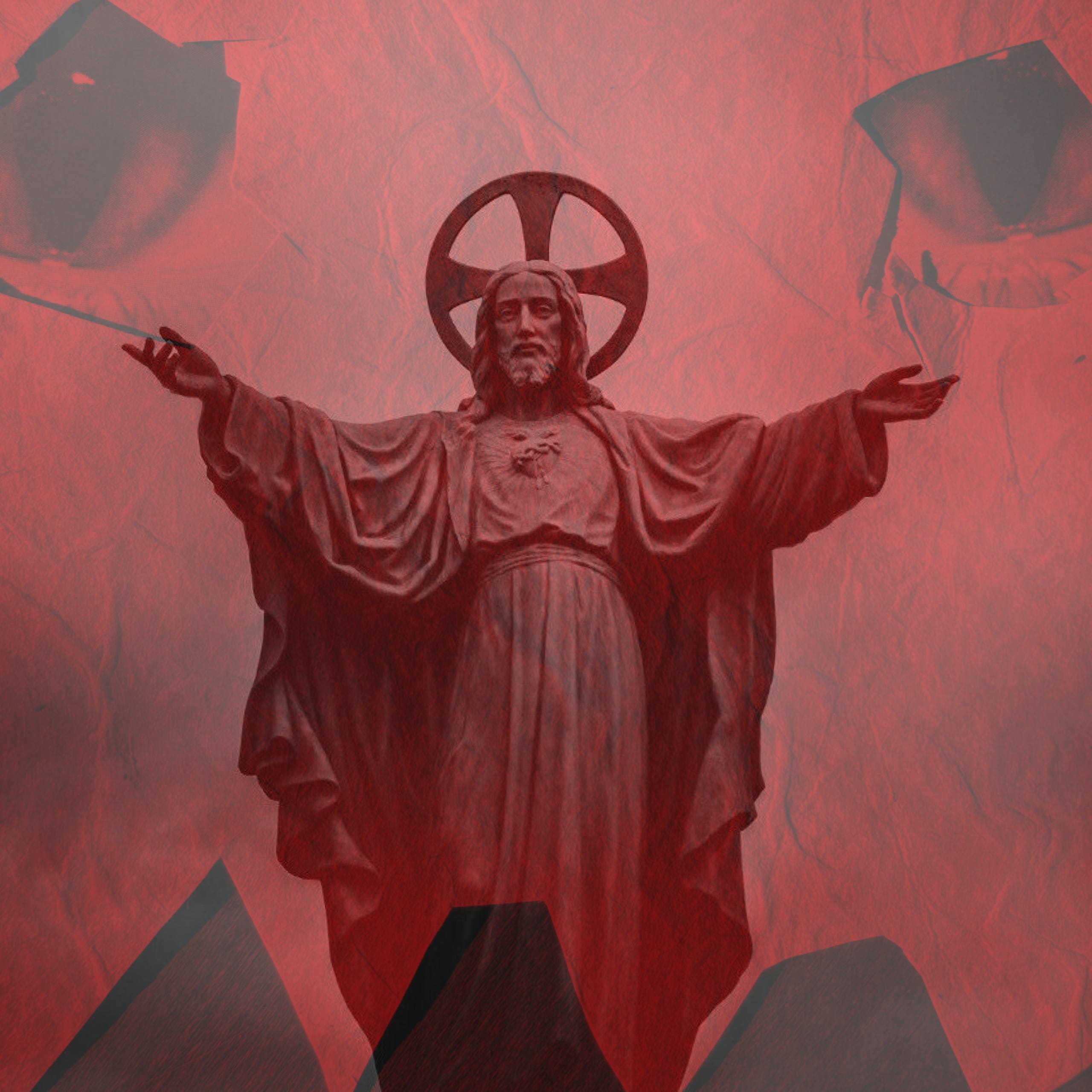
Wes’s house was tall and narrow, like a compacted castle or a child’s toy house. There was plenty of land all around, and it struck me odd that the builder didn’t let the building breathe a little.
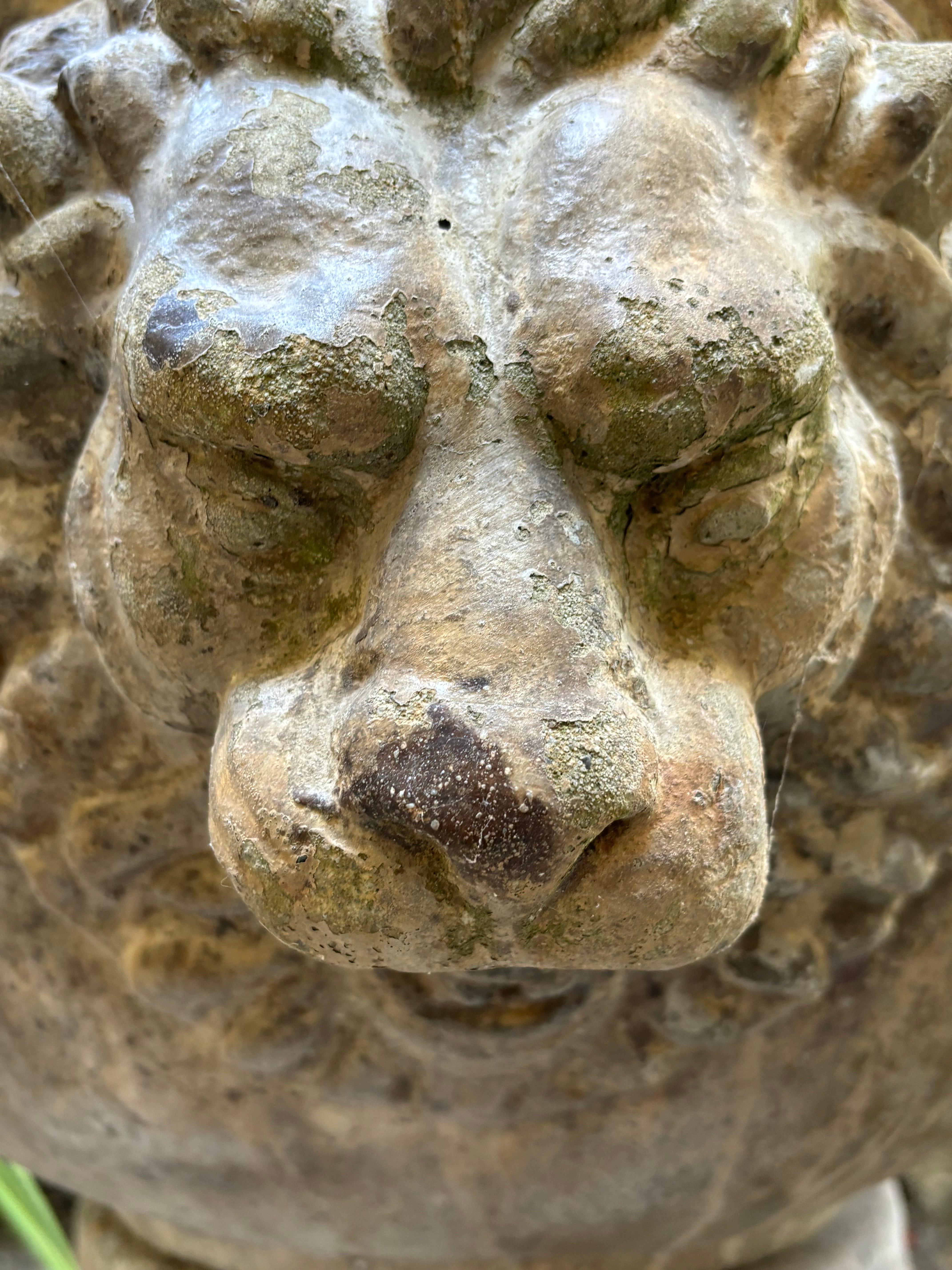
In the middle of the roundabout was a fountain with lion heads protruding from all sides, spitting water from between their teeth. I put my hand up to a lion’s mouth, making the water split into two streams.
“Sorta strange, isn’t it?” I said, motioning to the lions.
“What is?” said Wes, walking over to the fountain and dipping his finger into the basin.
“Lions on a fountain. Mermaids, dolphins—Neptune—I get all that, but lions?”
“My father...”. Wes looked up to a window at the top of the house, then turned to face me. “He told me it was a symbol of guardianship. That they protect this place.” He walked toward the front door. I followed. “Silly, I know. If that were true, I’d like this place much better.”
“It’s not silly—I wasn’t implying that it was silly. I just...thanks for the explanation.”
The oversized entryway looked more like a moveable wall than a door, with thick, heavy wood, and I was surprised when it swung easily on its hinges. A wide staircase with a maroon runner trimmed in gold rose to meet the red and blue light shining through a stained glass window at the landing. I wanted to run up the stairs and pray to it like a shrine. To confess all my sins, but I had none. Not at the moment.
“No, thank you,” I said, but not wanting to come across as a prude, added, “Alcohol makes me sleepy.”
“Be right back.”
“Sure,” I said. I was happy to be left alone to explore. All along the staircase were photographs. There was a picture of Wes with a woman, his mother perhaps, a picture of a dog, and one of Wes as a baby. Then I saw the photograph of a man who sported the same thick brown hair as Wes. I moved closer; his eyes were like Wes’s eyes, like melted wax.
“My dad,” said Wes, coming up the steps to meet me. “He won’t be home for a couple days. He’s on a business trip—thank God. He doesn’t like people over.”
I looked closer. “You don’t get along with him?”
“Not really. He’s never hurt me or anything...not really. Let’s go.”
He started up the stairs. I followed.
We listened to records and talked about our studies. Wes liked mathematics, I preferred the humanities. I told him how I never knew my dad, and he told me about his dad, too, but I got the sense he wasn’t telling me the entire story. Neither was I.
The next day at school, he waved to me from the field, where he played soccer with a few boys. I waved back. At the end of the day, I waited for him in front of the school, ready to ask him to go to the arcade or the mall, but he spoke first.
“I don’t think you should come over again,” he said. As he spoke, his pupils seemed to droop more than they had the previous day.
“Oh?” I said, holding back my tears. I knew that if I said more, my voice would quiver.
“Listen, I want you to...it’s just...I used you.”
“Used me?” I said, narrowing my eyes. “What do you mean?”
“I brought you back to my house because I hoped you’d...see her.”
“Who? Your momma?”
“No. My mother is in Berlin with her lover. Besides, she’ll never set foot in that house again—she’s told me so. I don’t blame her. I don’t have much choice in the matter. That’s the only reason I stick around.”
“If not your momma, who? A girlfriend? If it’s a girlfriend—that’s alright. I’m not looking for—”
“No! Nothing like that. I...it’s my aunt...I think. I don’t know. I hear her walking around at night. I hoped you would see her so I’d finally have someone on my side. My father pretends the whole thing never happened, but when I put on records... she doesn’t like music.”
I wanted to tell Wes there was no such thing as ghosts or demons, but I knew the truth: there are monsters everywhere.
“Let’s go,” I said, picking up my backpack.
“What?”
“Let’s go back to the house and look for your aunt.” I looked directly into Wes’s eyes. His pupils seemed firmer.
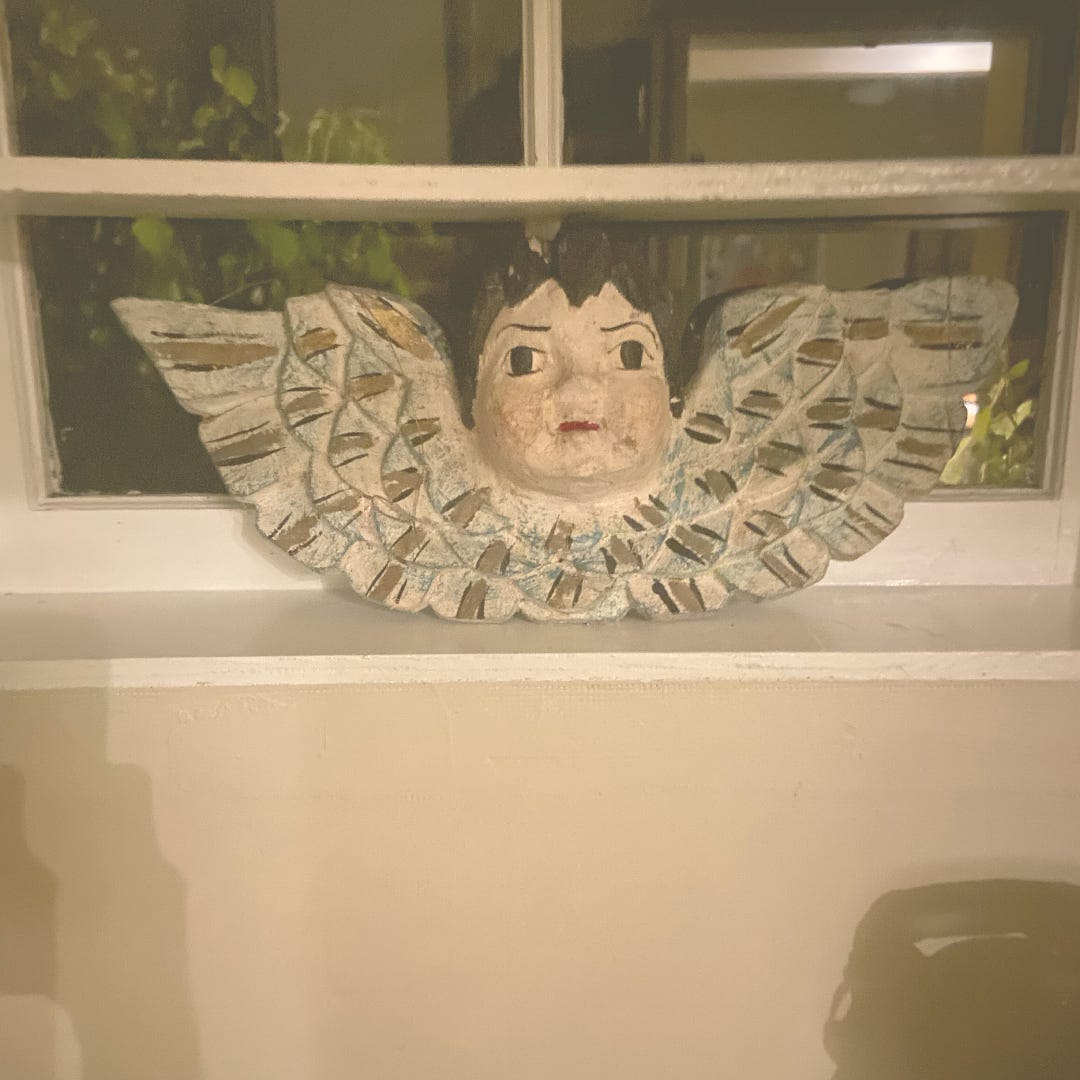
Over the years, Momma wrote down every lie she told and put them in the peppermint tin. Eventually, she said she started putting other things in there, too. Things she’d stolen and unchaste things—things she’d thought about but never acted on. She’d write them down and stick them in the tin. No matter what it was, when she opened that lid, they were gone. It took the sin away.

Wes stopped me before we entered. “I’ve never seen her in the daylight, just once in the middle of the night. I heard something up in the attic, so I went upstairs. My father was up there, staring into a mirror propped up against the wall. There in the mirror, I saw my aunt’s reflection, her hand coming through the pane as if it were an open window. When my father heard me come in, he turned to face me, and his pupils looked like they’d split open. I ran downstairs and locked myself in the bathroom, and when I looked in the mirror, my eyes were his eyes. I need you to listen to me very carefully. If you see her, you must keep your eyes closed. Do not look at her face—do you hear me? Never look at her face.”
I searched Wes’s cat-like eyes. “I promise I’ll keep them shut.”
“You ready?” Wes swung open the large front door.
We walked up the stairs, then down the hall, past Wes’s bedroom door. At the end of the hall, there was a second staircase.
“The attic?” I asked.
“Yes.”
“My aunt hung herself up there. We’re not sure why.
My father said she was a bad person...but she was always kind to me.” Wes’s face had gone from pale to ghostly.
“I can go up. Alone, I mean.” I wasn’t sure why, but I wasn’t scared. The sun was out, and looking up the staircase and through the opened door, I could see the room was full of sunshine. “Would you like me to go up alone?”
“I don’t know. I thought I would...but now I’m not sure.”
I embraced Wes. He looked surprised at first, then took my hand in his.
“Don’t look beneath her cowl,” he said.
“Don’t worry about me. Go wait in your room.” I started up the steps, and when I looked back, Wes was watching me. I smiled at him, the most handsome boy in the world.
The sunlight shone through the window, leaving no shadow. The room was dusty and sparse. A small spring bed was in the corner of the room. I sat down on it, and the springs squeaked in protest.
Downstairs, Wes put on a record.
I heard a scratching sound at the window. The bed squeaked again when I got up to investigate. Down in the roundabout, the lions spit into the fountain basin. A red and black bird walked around, pecking at the ground.
BOOM.
A pigeon hit the window, momentarily fluttering around on the windowsill before regaining its composure, then flying away as if nothing had happened.
“Shit,” I said, then laughed. I went back to the window and looked down. The lion heads were no longer spitting water. I heard the bed behind me squeak as if someone had sat down, but when I turned around, expecting to see Wes, there was nobody in the room.
I quickly walked down the steps and into Wes’s room. I nodded at him, and he covered his mouth and gasped. I told him that I was staying the night and that I had a plan. I told him how Momma used to tell me about tortured souls and how, in this life, there are things that need to be hidden away. I asked him if he still had the antique peppermint box I’d given him. He said he did. I told him we would lure the ghost out by playing music again, just like he’d done while I was upstairs. He said he hadn’t played any music.
Momma told me all about his face and how it was demonic at first, then stricken. Guilty. Most of the people in town called him Charlie, but she called him Charles. She thought that name was more attractive. He was a handsome boy until he wasn’t. He was a sweet boy until he held her down and did what he did. He stopped coming around after that. Eventually, he got married and had a little boy. Momma had a girl.
Momma says some sin doesn’t fit right. Not at first.
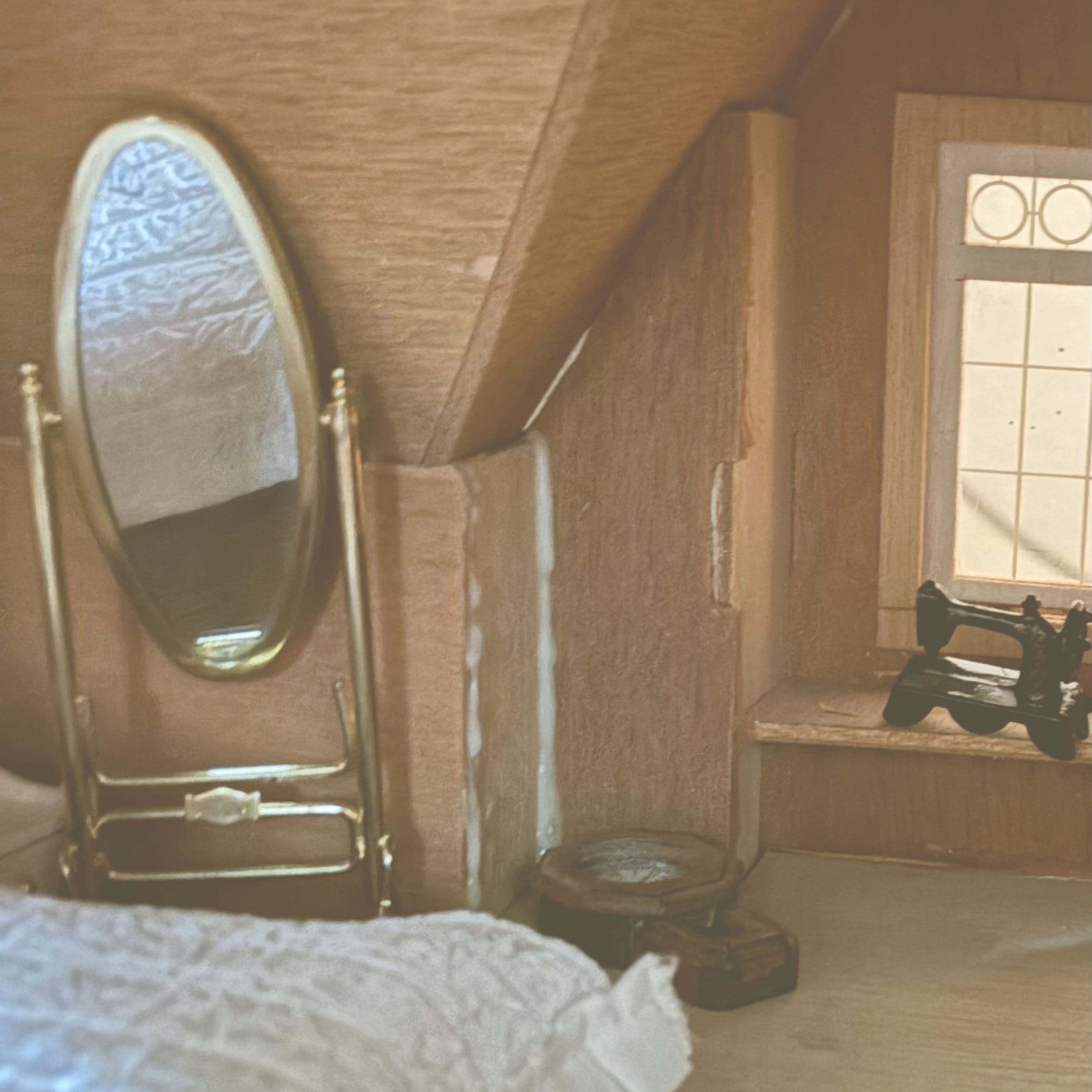
Wes helped me make the bed in the attic, but he kept glancing over at the mirror, which was still up against the wall. I could tell he didn’t want to be in the room.
“Okay, give me the tin,” I said, holding out my hand.
Wes handed me the tin and headed toward the door. “Are you sure about this?”
“Yes. I’m sure.”
As the sun went down, pockets of shadow formed in the corners of the room. I sat on the bed, staring in the mirror. Downstairs, Wes played the piano. I stood and walked over to the window. The lions were back at it, spitting into the basin. Then they stopped spitting. I turned around, and in the mirror there was a woman standing beside me, draped in a black cowl, just as Wes said she would be. I jumped back, but when I looked around the room, I was alone.
The music seemed louder, and though the piano was in the living room, I could hear the keys as they hit the felt pads beneath them and the sustain pedal repeatably being stepped on and released. I pulled out the tin, opening the lid in a hurry. Then I forced myself to breathe slow, deep breaths. I walked up to the mirror and peered in.
A woman in black stood behind my reflection. I couldn’t see her face but saw long, thin fingers curled, reach- ing out to grab me. I gasped, then said the words Momma told me to say, “In, in, into the tin, into the tin with all the sin!”
The woman raised her hands to her cowl; she was going to show me her face. I closed my eyes and whispered it again, “In, in, into the tin, into the tin with all the sin.”
When I opened my eyes, she was gone. I looked into the peppermint tin, but there was nothing inside. The music stopped, and I heard a shout.
“Father, no!”
Someone was bounding up the staircase.
I repeated the words. This time, I shouted them,
“In, in, into the tin, into the tin with all the sin!”
Wes’s aunt was there in front of me now, walking toward me in short, stilted steps. Her hands were on her cowl, ready to expose her face to me—to tell me her sins.
The door burst open, and the man from the photograph ran in. The man with the melting eyes, just like his son.
The woman in the cowl turned toward Wes’s father as the door slammed shut.
Wes shouted, pounding on the door. “What’s going on?”
Wes’s father closed his eyes. “Get out of this room, now,” he shouted at me. “Nobody should be in here!”
I didn’t leave. I approached the woman—this discarded woman—and touched her shoulder. She turned to gaze upon me with melting eyes.
“Get out of here now! Do not listen to her!” yelled Wes’s father.
“No,” I said. “I need to look.”
The woman grabbed my face in her pruney hands and whispered what I already knew.
I turned toward the father and yelled, “She’s gone!”
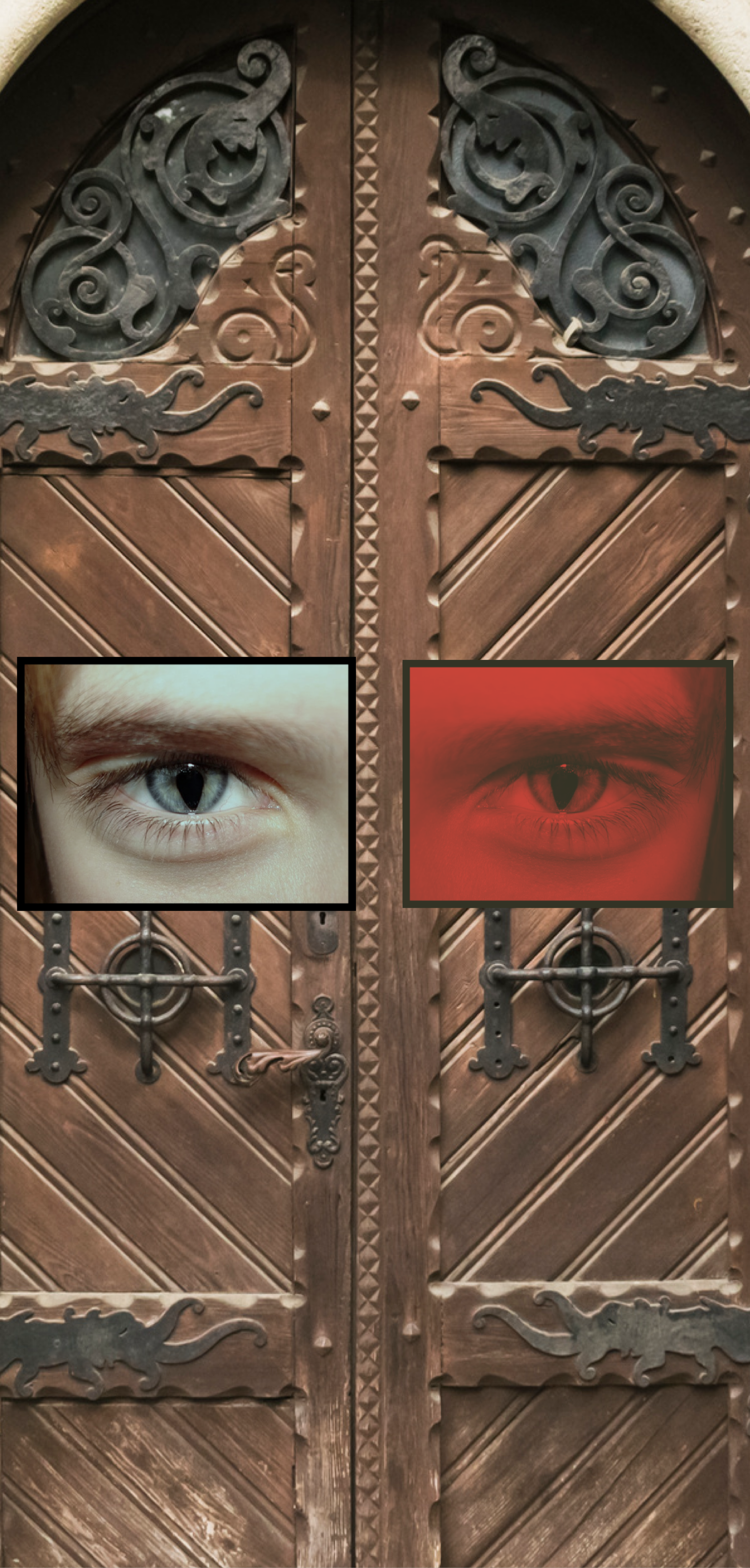
He opened his eyes and screamed, his vertical slits spilling out and down his cheeks.
I shouted, “In, in, into the tin, into the tin with all the sin!”
Wes’s father screamed in agony as his skin and bones compacted into the small tin. Flesh and blood dripped out from the sides.
I shut the lid.
The woman pulled her cowl back over her head, walked through the mirror, and was gone.
I unlocked the door, and Wes hurried into the room. “What happened!”
“The sins of our father are not ours to own,” I said, placing one hand on Wes’s cheek and handing him the peppermint tin.

Incredible. The stuff you do with this animal imagery. It's like Watership Down meets Wes Anderson (animated)and bits of Ari Aster and the Coen Brothers? I can't put my finger on it, which is good. That means its original! This took me a few sit downs. Loved it! I'm so glad you write and share your art. Your work ethics and general activity in the sphere is commendable. This is substantive and, as the other commentary said - free! (I have way worse on my Kindle I bought for way too much). Thanks for being a friend Sean.
Jeez, Sean. So glad this became available for my broke ass. This is the longest McDonnell I've read and it's so freaking good! I really hope I can tuck into something novella/novel length at some point. I need it!